
 Herbs
Herbs
 Vegetables
 Fruit
Fruit
 Flowers
 Succulents


All types of mint—including sweet mint, spearmint, peppermint, and chocolate mint—are fast-growing, spreading plants. Because mint spreads quickly, it needs space where it won’t get in the way, or it should be planted in a pot. Mint sends out runners that spread above and just below the ground, forming large, lush green patches. In the right location, mint makes an attractive seasonal ground cover. It can also be planted in tight spaces, such as between walkway pavers, where foot traffic helps keep growth in check.
Quick Answers About Growing Mint
- Does mint spread? Yes. Mint is a fast-growing plant that spreads through runners above and just below the soil.
- Should mint be planted in the ground or in a pot? Mint can be planted in the ground where it has room to spread, or grown in a pot to help keep it contained.
- Can mint be used as ground cover? Yes. In the right location, mint can form large, lush patches and work as a seasonal ground cover.
Quick Guide to Growing Mint
- Plant mint in spring after the last frost. This fast-growing herb can grow just about anywhere and makes an excellent addition to indoor and outdoor gardens.
- Space mint plants 18 to 24 inches apart. It's best to grow them in pots to keep them from taking over your garden (even if you're planting in the ground).
- Give your garden a great foundation by improving native soil with several inches of aged compost or other rich organic matter. For container growing, consider a premium bagged potting mix.
- Keep soil consistently moist and water when the top inch becomes dry.
- Promote excellent leaf production by regularly feeding with a water-soluble plant food.
- Once plants are established, harvest mint leaves regularly by pinching off the stems.
Soil, Planting, and Care for Growing Mint
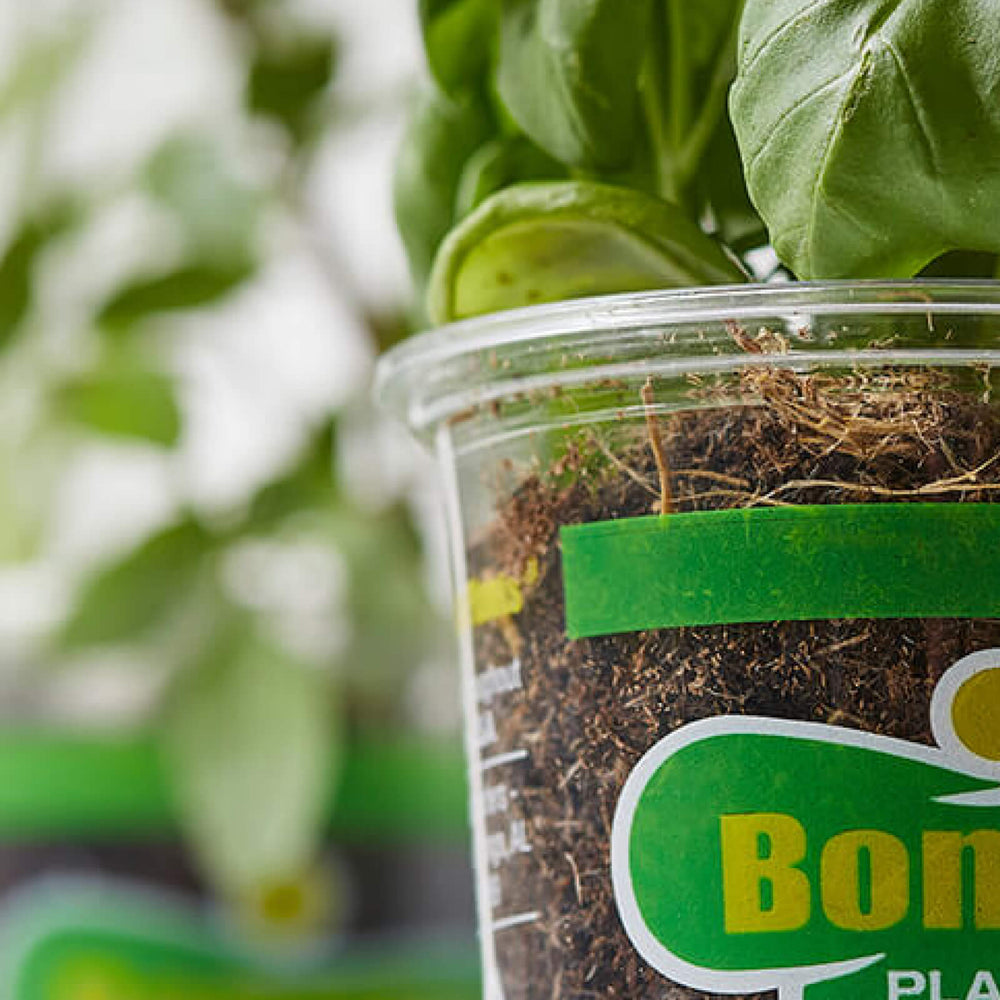
First, start off strong by planting young Bonnie Plants® mint plants. After all, you can't go wrong with a company that's been supplying plants to home gardeners for over 100 years! Plant mint in the spring, or in the fall in frost-free climates, setting seedlings 18 to 24 inches apart. Try growing mint in a pot where you can keep it in check and handy near the kitchen for a constant supply of sprigs. To give roots a just-right growing environment, fill the pot with Miracle-Gro® Performance Organics® All Purpose Container Mix, which contains aged compost to improve soil texture and nutrition. To keep mint from taking over space needed by other plants, you may want to plant it solo in a 10″ pot, then plant the pot in a larger container or even in the ground. Give the pot a turn every week or two to keep roots from escaping through the drainage holes.
If you simply must plant mint directly in the ground (if you're using it as a ground cover, for example), select a damp area in your garden or yard in either full sun or part shade. Mint prefers fertile soil with a pH from 6.0 to 7.0. If you don't choose to test your soil, you can simply improve it by adding a few inches of Miracle-Gro® Performance Organics® All Purpose In-Ground Soil, also enriched with aged compost, in with the top layer of existing soil.
Mint is plenty vigorous on its own, but will grow even better when you pair great soil with regular doses of plant food, especially if you harvest a lot. Feed with Miracle-Gro® Performance Organics® Edibles Plant Nutrition (follow label directions), which feeds the soil as well as the plants. Be sure to keep the soil moist via regular watering and add mulch around the plant to help slow the evaporation of all that crucial moisture.
To help keep plants in check, harvest the tips regularly and pull up wayward runners. Mint's small flowers bloom from June to September; trim these before the buds open to keep the plant compact. Although slightly frost tolerant, the top of mint will eventually die back in winter except in zones 8 and south, but the root are quite hardy, surviving into zone 5 (some varieties even into zone 3). Lift and replant your mint every 3 to 4 years to keep your patch's flavor and scent strong.
Troubleshooting when Growing Mint
Although mint is a rugged plant, when it is young it is vulnerable to whiteflies, blackflies, spider mites, snails, and slugs.
How to Harvest Mint
Harvest mint leaves at any size by pinching off stems. For a large harvest, wait until just before the plant blooms, when the flavour is most intense, then cut the whole plant to just above the first or second set of leaves. In the process, you will remove the yellowing lower leaves and promote bushier growth. Three such harvests per season are typical for mint.
How to Use and Store Mint
Fresh mint leaves are a nice complement to lamb, fish, poultry, and vegetables such as peas, new potatoes, and carrots. Mint also blends well with green or fruit salads and beverages such as punch, lemonade, and tea. Two very well-known drinks, mint julep and Cuban mojito, both depend on spearmint for their cool zest. Freeze mint in cubes for iced tea. You can also preserve it in vinegar or dry it for potpourri or sachets.



FAQs
Can I plant mint in a pot?
Yes, mint grows very well in containers. Plant one mint plant in a pot that is 12 to 14 inches in diameter.
Choose a pot that can withstand freezing temperatures and use high-quality potting mix. Keep the soil moist and harvest regularly, as cutting encourages fresh growth. Place the pot on a paved surface or pedestal so mint does not spread through drainage holes.
Do I need to fertilize mint, and how much should I use?
Mint benefits from extra nutrition, especially when grown in pots. Use a time-release fertilizer in spring at the rate recommended on the label.
You can also top-dress garden mint with compost or composted manure. If growth slows during summer, check soil moisture, as mint prefers consistently moist soil.
Can I contain mint with steel edging?
Steel edging can help, but mint may still escape. Long stems can bend over the edging and root on the other side.
For best control, plant mint in containers or in areas bordered by concrete, such as between a sidewalk and foundation. If mint spreads into the lawn, regular mowing will keep it in check and release a pleasant aroma.
How do I harvest mint for fresh-brewed tea?
Mint tea is made by steeping fresh mint stems in hot water. Cut 3 to 4 stems that are 6 to 8 inches long.
Rinse the stems, place them in a pitcher or teapot, and pour boiling water over them. After about 10 minutes, remove the leaves. The tea can be enjoyed hot or cold and stored in the refrigerator for a few days.